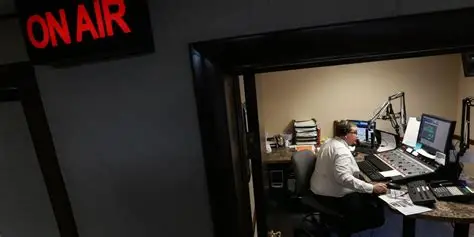
Notes for the people who were there…
By Gunther Forde
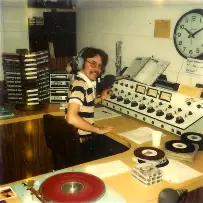
If you are reading this and your stomach turned a little at the words “music log” or “production reel” or “transmitter meter reading,” this one is for you.
Not the legends. Not the names everybody on the chat boards still types out in capital letters when an obituary runs. You. The kid who ran the board from midnight to six at a 1,000 watt daytimer in a town the rest of the country never thought about. The college sophomore who pulled the Sunday morning public affairs shift for a year and a half and didn’t get paid for half of it. The guy who did weekends for six weeks at a heritage AM in 1975 and was never put on any alumni page because nobody who built the alumni page remembered he was ever there. The woman who was on overnights in a Midwestern Top 40 for fourteen months in 1981 and then left to have a baby and never came back. The afternoon guy in a market of 87,000 who walked away in 1979 to sell siding because his second kid was on the way and the math didn’t work anymore.
You were there. That counts. This is about all of us who were there.
* * *
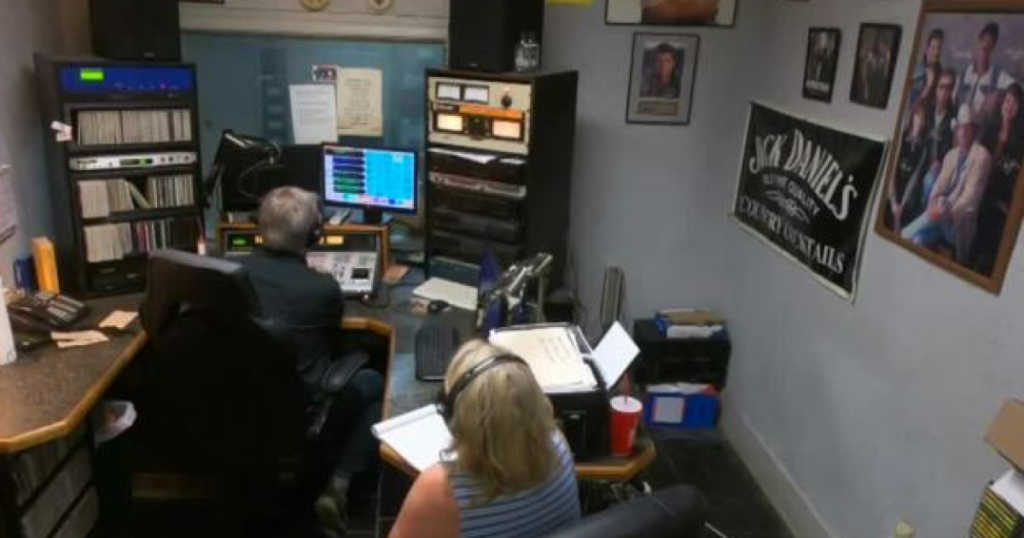
There is a particular smell that nobody under fifty has ever known. It is the smell of a 1970s radio station production room at two in the afternoon. Burning vacuum tubes from a Gates console that should have been replaced before the Carter administration. The chemical tang of splicing tape. The faint sweetness of the lubricant on a Spotmaster cart machine. Stale Maxwell House from a percolator that ran continuously from six in the morning until the night guy came in at midnight. Somebody’s Marlboro Red working its way through the acoustic foam. And underneath all of it, the warm electrical breath of equipment that ran twenty-four hours a day, every day, for years.
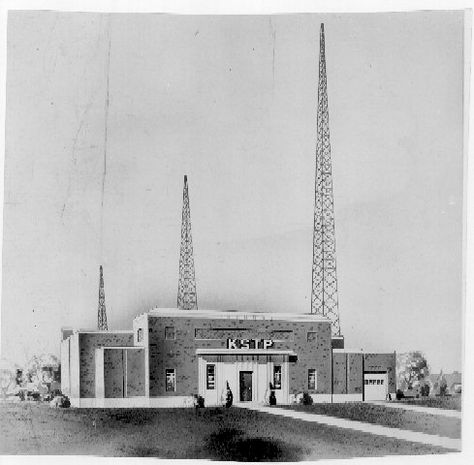
That smell is gone now. The rooms are gone. The buildings are mostly gone. The people who knew the smell, who knew which mic in studio B had the wonky pop filter and which cart deck would eat a Heinz Ketchup spot if you didn’t seat it just right, those people are in their seventies and eighties now. We are leaving at the rate of two or three a week.
This is a story about all of us. The ones who stayed for forty years and the ones who stayed for forty weeks. The ones who hit a major market and the ones who topped out at market 142 and were genuinely fine with that. The legends and the lifers and the kids who were great on the air for one summer in 1976 and never told anybody about it because by 1985 they were married with two kids and a sales territory and it just didn’t come up.
The generation we are talking about came up between roughly 1962 and 1985. While we were doing the work, almost none of us bothered to document any of it, because none of us had any earthly reason to believe it would be worth documenting later.
* * *
We started young. We started absurdly young. You finished high school and forty-eight hours later you were running the all-night board at a station in a town nobody you knew had ever heard of, making less money in a week than your sister made waiting tables on a Friday night.
The kid who later became Dr. Don Rose at KFRC San Francisco did not arrive there by a managed career path. He arrived there by working seven other stations first, each one a little bigger than the last, each one teaching him something the last one couldn’t. Dick Biondi was on WLS Chicago in the early sixties at the height of the Top 40 explosion. Then he was gone. Then he was back twenty years later on WJMK, somehow still doing it. Pat O’Day put KJR Seattle on the national map in the sixties and seventies and then quietly walked into the rest of his life. Salty Brine sat behind the same microphone at WPRO Providence for nearly fifty consecutive years, the kind of tenure that does not exist anymore and never will again.
These are the ones we remember. These are the survivors of the survivor bias.
For every Pat O’Day or Cousin Brucie Morrow, there were a hundred other jocks every bit as good, sometimes better, who never made it out of secondary markets. Or who burned out at thirty. Or who got out clean and went to law school. Or who got drafted in 1968 and came back in 1971 to find the format had changed, the old PD was selling insurance in Tulsa, and there was no longer any room at the inn. Those people just evaporated. Not because they weren’t talented. Because nobody was writing it down, and they sure weren’t writing it down themselves.
* * *
The economics explain a lot of it. You were twenty-two years old and you were making $185 a week before taxes, working six days, sometimes seven, sometimes a split shift that had you on the air from five to nine in the morning and back again from three to seven in the afternoon. The meal break was theoretically four hours long. In practice it was forty minutes, because you had production to cut, a remote to set up at the Goodyear store on Saturday, and the morning guy had called in sick again so guess who is covering.
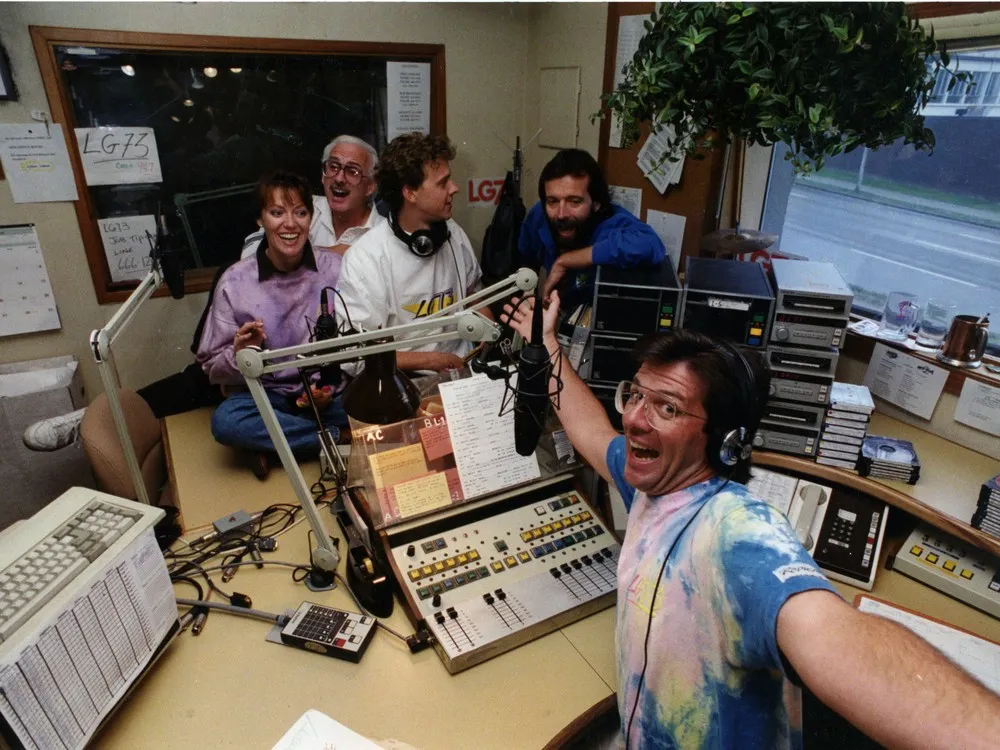
You slept on a friend’s couch for the first six months in a new market because nobody could afford an apartment on what the station paid. The station paid what it paid because that’s what stations paid. That’s what they paid because there were five guys behind you who would do the gig for less.
Nobody talked about this part out loud. You were doing what you wanted to be doing. You were on the air. You were Bruce Bradley Hollister or Johnny Beachfront or whatever ridiculous name the PD had stuck you with when you walked in the door. Your real name was for tax forms and traffic tickets. Your air name was for the only thing that actually mattered.
You filed your AFTRA card at seventeen, in some cases earlier, and the union dues came out of the check before the rent did. You didn’t have health insurance. You didn’t have a 401(k). The concept of a 401(k) did not yet exist. Nobody was thinking about any of that, because you were twenty-two, and twenty-two year olds do not think about retirement. Especially not twenty-two year olds who can already make a room full of strangers laugh by talking into a piece of foam covered metal.
* * *
Here is something the younger people will never understand. We were fighting for the number one push button on a car radio.
Not the algorithm. Not the playlist. Not the recommendation engine. A literal piece of chrome on the dashboard of a 1976 Cutlass Supreme, with five preset buttons across the bottom of the AM dial, and the kid driving home from school at three thirty in the afternoon would push button number one because that was his favorite station. Your job, every day, every break, every promo, every song, was to be that button. If the kid drifted to button number two, you had failed. If the kid drifted to FM, the whole industry had failed.
Before Napster. Before Spotify. Before satellite radio. Before the iPhone made every song in the world available in three seconds. Before voicetracking turned afternoon drive in twenty-eight markets into one guy in a closet in Atlanta cutting six breaks in an hour and pretending to be local. Before consolidation rolled through and turned three hundred mom-and-pop stations into a corporate spreadsheet. We were the entertainment. We were the news. We were the weather. We were the company you kept on the drive home. The audience could not skip us. They could only love us or change the station, and changing the station was a physical act of disloyalty that we took personally.
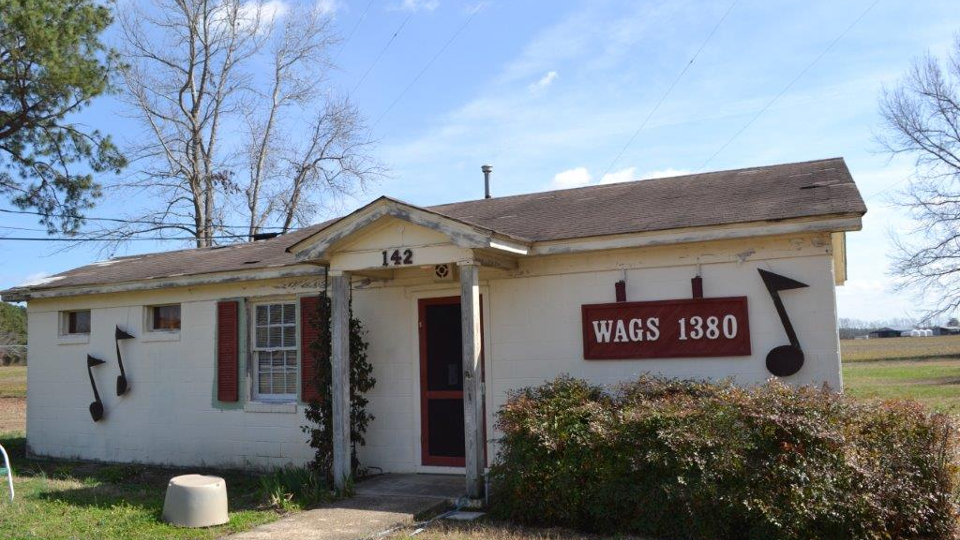
The buildings reflected it. A real, full-service AM in 1973 had a building. An actual building, with a lobby and a receptionist and a sales bullpen and a news department and a production room and two on-air studios and an engineering bench and a transmitter shack out back. There were human bodies on the air around the clock. Every shift was a person. Every break was a person. Every newscast was read by somebody who walked in that morning, took off a wet coat, read the wire copy, and went on the air ten minutes later.
You took the transmitter meter readings every thirty minutes and you logged them in a green hardbound book by hand, because the FCC required it and because the FCC could show up at the back door at three in the afternoon on a Tuesday with no warning and ask to see the log. The fear of that knock was real. The chief engineer kept the log spotless because his license was on it. The board op kept the log spotless because his job was on it. You sat in the chair at the console and you ran the show and you watched the plate current and the modulation needles and you wrote it down every half hour because the alternative was a fine the station could not afford and a notice from Washington that would put your name in the trade press for the wrong reason.
That world is gone. The buildings have been sold. The transmitter shacks have been demolished or repurposed. The hardbound logs got pulped twenty years ago. The receptionists were laid off in the first round. The news departments were laid off in the second round. The local jocks were laid off in the third round, replaced by a satellite feed from a guy in Atlanta who would never visit your market and didn’t know your sponsors. The mom and pop owner who built the station in 1967 sold it to a regional chain in 1987 who sold it to a bigger chain in 1996 who sold it to Clear Channel in 1999. By 2003 the building was a Verizon store.
* * *
We moved. God, we moved.
You worked a small daytimer in your hometown. Then a regional AM in a market two states over. Then a 50,000 watt clear channel that fired you within a year because the new PD didn’t like your tag. Then a Top 40 FM in a Sunbelt growth market where you stayed for a sweep and got poached. Then a heritage AM in the Northeast that was already starting to bleed audience to the FM band. Then a brand new FM signal that didn’t have a format yet and was making it up as it went. By thirty you’d lived in six cities. By forty you’d lived in ten. Your kids went to four different elementary schools. Your first wife went home to her mother during the second move. The second wife came with you because she was in radio too, until she wasn’t.
The migrations followed the formats. When Bill Drake’s Boss Radio template swept across the country in the late sixties, it created a national grid of stations that all sounded vaguely the same and all needed talent who could deliver that sound on demand. A jock could go from KHJ Los Angeles to KFRC San Francisco to WOR-FM New York to CKLW Detroit and Windsor and feel, on the air, like he’d barely left the building. The Real Don Steele and Robert W. Morgan did at KHJ what they did because Ron Jacobs put them in a position to do it, and what they did changed how American Top 40 sounded for fifteen years.
When Mike Joseph’s Hot Hits format rolled through Philadelphia and Pittsburgh and Detroit in the early eighties, it created another grid, another set of openings, another wave of jocks moving city to city. When Buzz Bennett assembled the 13Q lineup in Pittsburgh in 1973 to take down KQV, he flew Jackson Armstrong in from Buffalo, Dennis Waters from Washington, Mark Driscoll from Los Angeles, Sam Holman back from Chicago. The roster read like a Top 40 all star team. Within six years the format had been retired and the call letters were on their way to becoming something else.
In the FM rock world it was a different migration. Tom Donahue had launched what would become free-form FM at KMPX San Francisco and then at KSAN, and the talent that orbited him spread out across the country to seed AOR stations in every major market. B. Mitchel Reed went west and then east and then west again. Charlie Tuna seemed to be everywhere at once. Howard Stern was at WRNW in Briarcliff Manor, then WCCC Hartford, then WWWW Detroit, then WWDC Washington, then WNBC New York, then WXRK. A six step ladder that we now read as inevitable. While he was climbing it, from the inside, it looked like five firings and a fistfight with a GM.
The smaller market jocks did the same thing, just without the cushion. A kid out of central Pennsylvania might do a year at a daytimer in Altoona, then move to Wilkes-Barre, then Binghamton, then Albany, then Hartford, then Boston, and if he was lucky and his timing was right, New York. A kid out of Florida might run the board at WGGG Gainesville at seventeen, get a music director gig at WDAT Daytona at eighteen, take a program director chair at WWKE Ocala at nineteen, and be in Birmingham by twenty-one. The pattern was always the same. Market up, market up, market up, and pray you don’t get fired in a market too small to bounce back from.
* * *
Nobody saved anything.
This is the part that breaks an archivist’s heart. You walked into a typical Top 40 station in 1976 and the lobby had a wall of framed promo photos and gold records. A stack of last week’s music surveys on a coffee table. A glass case full of bumper stickers and station T-shirts and lighters with the call letters on them. A corkboard with Polaroids from the last remote at the Oldsmobile dealership. A wire rack with last month’s discarded music logs. A filing cabinet behind the receptionist’s desk full of every program director’s hand-typed talent rotation sheet going back six years.
Twenty-five years later, every single piece of that was gone.
The lobby photos went out in a dumpster the morning the station was sold. The music surveys went to the recycling place by the case. The bumper stickers became the kind of thing that, if your kid happened to grab a fistful and stash them in a shoebox in a garage in 1979, they are now worth more than your first car. The Polaroids went home with the promotions director, then in a divorce, then in an estate sale, and at some point in 2003 some grandkid threw them out without looking at them because they were just photos of a guy with sideburns standing next to a Cutlass Supreme. The music logs got recycled. The talent rotation sheets got thrown out the day the format flipped, by the new PD’s secretary, who had been instructed to make the office look like a fresh start.
The carts went into landfills. The reel to reels, the actual production reels, the master tapes of the legal IDs and the produced promos and the season’s worth of morning show bits, those got demagnetized and reused. A virgin reel of Scotch 3M tape cost real money, and a station that needed to record its FCC mandated public service announcements at three in the morning was going to use whatever reel was sitting in the bin. Including the one with the master of the morning team’s signature bit that they’d worked on for six weeks in the spring of 1977.
The cassette airchecks, the ones we made of our own shows, the ones we sent to PDs in other markets as résumé tapes, those went into shoeboxes. The shoeboxes went into hall closets. The hall closets went into garages. The garages, eventually, went into estate sales after somebody died. A stranger walked through and didn’t recognize the names on the cassettes and put them in a Hefty bag.
This was not negligence. It was not laziness. It was that nobody, nobody, thought any of it was going to matter later. It was just Tuesday afternoon. You produced the spot. You ran it through the week. You erased the cart. You moved on. The idea that some seventeen year old in 2026 was going to want to hear a 1974 sweeper for a Buick dealership in Wichita would have struck everyone involved as the funniest thing they had heard all month.
* * *
The careers branched in directions nobody could have predicted.
Some of us stayed in. Larry Lujack stayed in at WLS until he didn’t anymore, and then he went home to Wyoming and that was that. Dan Ingram stayed at WABC until WABC stopped being WABC, and then he found his way to WCBS-FM and stayed there too, because some voices the format will always make room for. Ron Lundy stayed. Harry Harrison stayed. Bruce Morrow stayed and is, miraculously, still staying. Cousin Brucie has now been on the air longer than most American broadcasters have been alive.
Some of us pivoted. Gary Owens was on KMPC mornings in Los Angeles and also somehow became the announcer everybody knew from Laugh-In and a hundred cartoon shows. The radio paid the bills while the voiceover work paid for the house. Casey Kasem went from being a market jock to being a syndicated American institution, and the American Top 40 checks dwarfed anything any single station could ever have paid him. Rick Dees made the same jump from WHBQ Memphis and KIIS-FM Los Angeles into a syndicated empire, and then into television, and then back. Some of these pivots were planned. Most weren’t. Most were what happened because somebody on the production side happened to call at the right moment.
Some of us got out. The talented weekend jock who left in 1978 to sell Buicks for his uncle in Akron, made his number every quarter for thirty two years, retired comfortably, and never mentioned to his grandchildren that he had once been on the air in Cleveland. That guy is not a hypothetical. There are thousands of him. The brilliant overnight guy from a Top 40 station in St. Louis who got drafted in 1969 and came back from Vietnam in 1971 and could not get a callback from anyone, who eventually got a teaching certificate and taught eighth grade social studies until he was sixty-six. Also not a hypothetical. The morning show partner of a guy whose name you would recognize, who got fired in 1981 in a market dispute that had nothing to do with her performance, who could not find another on-air job, who tried for two years, who eventually went into pharmaceutical sales and was very good at it and made a great deal of money and never set foot in a radio station again. Also not a hypothetical.
Some of us got fired into the next thing. Steve Dahl set the Disco Demolition Night bonfire at Comiskey Park in 1979 as a stunt for WLUP Chicago, and the resulting near-riot got him fired everywhere except his own market, where he became immortal. Don Imus got fired more times than most people get hired and was, at one point, simultaneously the most listened to and most loathed morning man in America. Howard Stern got fired from WNBC and turned it into the second half of his career. None of these guys planned that. They just kept going.
And then there is the longest, quietest tail of all. The folks whose names exist only on partial alumni rosters, on yellowing photocopies of station promo flyers, on the back of cassette J-cards with hand printed labels, on the credits of a Casey Kasem countdown rerun that nobody under sixty will ever watch. Jeff Roteman has done the Lord’s work for 13Q Pittsburgh. Somebody has done it for KHJ. Somebody else for WABC. The Bhamwiki crew has done it for Birmingham. Every one of those rosters is acknowledged by the people who built them to be incomplete. The weekend jock who came in for five Saturdays in the summer of 1975 because the regular weekend guy had appendicitis is not on any roster. The fill-in morning guy who covered for two weeks in February 1977 while the regular morning guy went to rehab is not on any roster. The intern who was so good they let her run the board on overnight relief for a month in 1979 is not on any roster, and she is seventy three now and works at a community college in upstate New York and tells nobody.
* * *
The funeral notices in Radio Ink and Inside Radio are the steady drumbeat under all of this now. Every week, two or three. Sometimes more. A morning legend in Indianapolis. A program director in Cleveland. A small market GM in the Carolinas who never worked above market seventy but who hired half of what is now the entire syndicated talent roster at iHeart. A voiceover guy whose pipes were on every car commercial in the Midwest for twenty years and whose name almost nobody knew. The notices run two paragraphs. The obituaries don’t capture a tenth of it. The stories that went with those names, the political fights, the format wars, the affairs, the great bits, the night Carlin came through the studio in 1971 and the whole crew ended up at an after-hours bar until four in the morning. None of those stories will ever be told now, because the only people who could tell them are also dead, or close enough to it that the details have started to soften.
The trade press caught the headlines. Arbitron caught the numbers. The headlines and the numbers are not the same thing as the texture, and the texture is what is disappearing. What did it actually sound like to drive home from work on Friday afternoon in Detroit in 1974 with CKLW on the dashboard radio and the Big 8 jingle hitting on the hour? What did it feel like to be in a high school parking lot in Tampa in 1982 with a boom box on the hood, Q105 playing? The numbers will not tell you that. The trade press will not tell you that. Only the tape will tell you that. The tape is fragile. The people who made the tape are aging out. The institutions that should be preserving this stuff are not.
* * *
What survives, then, survives by accident. A kid in San Diego in 1987 happened to point a VHS camcorder at a TV monitor in a Q106 studio, and that footage of a single afternoon drive jock running the board and juggling phones and performing every break is now one of the most-watched personality radio documents on the internet, because somebody happened to have a camcorder. A traffic engineer in Boston happened to record an off-air feed of a 1979 afternoon shift onto a reel that he kept in his basement for forty-five years because he never quite got around to throwing it out, and that reel is now the only known recording of a particular jock’s middays during that station’s peak. A teenager in St. Louis happened to flip the record button on a Panasonic cassette deck during a 1976 interview, and forty-eight years later a clip of Cheech and Chong promoting Up in Smoke with a young Florida transplant on a Top 40 AM in St. Louis is sitting on a SoundCloud page that gets a few hundred plays a year, mostly from people who themselves were there.
This is the entire archive. This is what we have. This is what an era of American mass culture that was reaching more Americans more days a week than any medium ever had has been reduced to. A few hundred cassettes. A few thousand reels in private collections. A handful of tribute sites built by enthusiasts in their spare time. A YouTube channel here and there. The rest is gone, or going.
The people who could still tell you what it was actually like, who could sit across a table from you and explain why the night guy at a certain 1974 Top 40 in Kansas City got fired in the middle of his shift, or what Buzz Bennett actually said in that 1973 staff meeting at 13Q, or how a particular legendary morning team really fell apart, or what it cost emotionally to walk into a new market for the eleventh time at thirty-six years old. Those people are now mostly between seventy and eighty-five. The clock is not generous.
* * *
The people preserving this history are doing it in their kitchens and basements and home offices, on their own time and their own dime, because they care. They are not getting rich. Most of them are not getting paid at all. They are doing it because they understand that if they don’t, nobody will.
The late Richard Irwin, known to a generation of radio people simply as Uncle Ricky, built REELRADIO out of nothing starting in 1996 and built it into the foundational online archive of Top 40 airchecks before anyone in the radio industry had figured out the web was going to matter. He kept the lights on for more than twenty years on subscriber donations and his own dedication, until his passing in 2018. The site continues today under the stewardship of the North Carolina Broadcast History Museum at reelradio.ncbhp.com, with more than 3,500 exhibits, every one of them irreplaceable.
Tom Gavaras has been at it for more than twenty years at RadioTapes.com, preserving more than 2,500 recordings from Minneapolis and St. Paul going back to 1924, with help from a network of over 100 collaborators. Art Vuolo has spent decades documenting radio history on video and is rightly known across the industry as Radio’s Best Friend. His work lives at vuolovideo.com.
Charlie O’Brien keeps the CKLW Detroit and Windsor legacy alive at big8radio.com, where you can still ask Alexa to play the Big 8 and hear the station that defined a generation. The Music Radio 77 WABC tribute site at musicradio77.com preserves the heritage of one of the most influential Top 40 stations in American history. 1050CHUM.com does the same for Toronto’s pioneering Top 40. WIXY1260.com keeps Cleveland’s WIXY alive. 98WRC.com preserves the Great 98 in Washington D.C. The WPGC tribute site at amandfmmorningside.com captures Washington’s other Top 40 powerhouse. WOLF1490.net does it for Syracuse. The KQLZ Pirate Radio Los Angeles tribute at kqlz.com keeps the rock memory. WLSHistory.com chronicles Chicago’s WLS. The Pittsburgh 13Q tribute at user.pa.net/~ejjeff/ is Jeff Roteman‘s life’s work. Rock Radio Scrapbook at rockradioscrapbook.ca does the same for Canadian rock radio. The USA Radio Museum at usaradiomuseum.com casts a wide net across American broadcasting history. FM Airchecks at fmairchecks.com, Airchexx at airchexx.com, Aircheck Downloads at aircheckdownloads.com, Tophour at tophour.com, Format Change at formatchange.com, The Airplay Channel at theairplaychannel.com, PBRTV.com, the New York Radio Archive at nyradioarchive.com, California Aircheck, and the radio history pages at Bhamwiki and on RadioDiscussions.com are all preserving their corners of this history with the same dedication and the same lack of resources and the same conviction that this matters.
And Aircheck Radio at aircheckradio.us is in that same fight, broadcasting twenty four hours a day, every day, in random rotation from a pool of recordings donated by retired and semi retired broadcasters. No paywall. No advertising. No algorithm. Just the actual sound of what we did, unscoped and unedited, with the static and the tape dropout and the commercials for car dealerships that closed forty years ago, exactly as it went out over the air. Run by the same people who lived through this, for the same reason all the other sites in this list are run. Because if we don’t keep it, nobody else will.
None of these sites is more important than any of the others. We are all doing the same work. We are all on the same team. We are all running out of time.
If you have a tape in a shoebox, send it to one of these sites. Any of them. Pick the one that fits your collection best, or pick the one whose contact form you can find first. It does not matter which. What matters is that the tape moves from your shoebox to a place where somebody else can hear it, before the tape goes brittle, before the shoebox gets thrown out, before any more of us are gone.
* * *
So this is for you, if you were there.
For the kid who pulled the all night shift at a 250 watt directional in Iowa in 1972, talked to maybe thirty truckers and an insomniac dispatcher, and quit a year later for community college. You were there.
For the morning team that owned a market of 60,000 for eleven years and was never going to leave because the market was home and the kids were happy at the high school. You were there.
For the weekend warrior who held down a daytime sales job and showed up Saturday at six in the morning to run the board for the swap shop show, did it for sixteen years, and never made a dime above gas money. You were there.
For the woman who got fifteen minutes on Sunday afternoon in 1976 to do public affairs because the station had to, who turned it into a thirty year career in news. You were there.
For the engineer who babysat a transmitter through forty-six lightning seasons and never lost a minute of air time. You were there.
For the program director in market 110 who built the best little Top 40 anybody never heard of, who couldn’t get a callback from any major because he was too young, then too old, then too provincial, then too unfashionable. You were there.
For every jock who looked at the dashboard of his car on the way home from a midnight to six shift and thought maybe tomorrow night the kid driving home will push button number one for me. You were there.
The radio dream may not have played out the way any of us once envisioned it. The buildings got sold. The formats got flipped. The corporate gobbled up the mom and pop. The voicetracking replaced the human bodies. The kids stopped pushing buttons because the buttons stopped being buttons. The whole industry quietly walked into the next thing and most of us walked with it or walked away from it, but either way we walked into a world where what we had done with our twenties and thirties became something the next generation would have to be told about, if anyone bothered to tell them.
But we were there. We sat in the chair. We ran the show. We took the readings every thirty minutes. We watched the back door for the FCC. We fought for the push button. We made a market feel like a community for the four hours we were on the air, every day, for years.
We were just doing Tuesday afternoon. None of us thought it would matter.
It mattered. It matters. It still does.
And whether the rest of the world ever figures that out or not, the people who were there know. We know.
That counts.